
Imagine meeting a potential client in a crowded coffee shop because you don’t have a dedicated office. While the conversation may go well, the setting can affect your professionalism, privacy, and client confidence.
Today, office space is more than just a place to work. It can influence productivity, collaboration, company culture, client relationships, and business growth. Whether you’re a startup, growing company, or established organization, the right workspace can strengthen your brand and support better performance. In this guide, we’ll explore the importance of professional office space and what to consider when choosing one.
What Is Professional Office Space?
A professional office space is a dedicated workplace designed to support business operations, employee productivity, client interactions, and future growth. Unlike working from temporary locations or informal settings, a professional office provides the infrastructure and environment businesses need to operate efficiently.
Most professional office spaces include:
- Dedicated workstations
- Private offices
- Meeting and conference rooms
Reception areas - High-speed internet and technology
- Business support services
- Collaborative workspaces
- Security and access control
These features help create a workplace that supports both daily operations and long-term business goals.
Components of a Professional Office Space
| Feature | Purpose |
| Reception Area | Creates a positive first impression |
| Meeting Rooms | Supports professional client interactions |
| Private Offices | Provides privacy and focus |
| Collaborative Areas | Encourages teamwork |
| Business Technology | Improves efficiency |
| Security Systems | Protects employees and assets |
Why Does Professional Office Space Matter?
Many business owners focus heavily on marketing, sales, and operations. While these areas are essential, the workplace itself can significantly influence how successfully those efforts translate into results.
A professional office serves as the foundation for business activities. It creates structure, supports communication, and provides an environment where employees and clients feel confident.
Some of the biggest advantages include:
- Improved productivity
- Better client trust
- Enhanced collaboration
- Stronger company culture
- Easier recruitment
- Greater scalability
Professional office space is not simply an operational expense—it is an investment in business performance.
How Professional Office Space Improves Productivity
Productivity is one of the most important factors behind business success. Employees perform best when they have access to an environment designed to support focus, efficiency, and collaboration.
A dedicated office helps reduce common distractions while providing employees with the tools and resources needed to perform their jobs effectively.
For example, consider the difference between:
- Conducting an important presentation from a noisy public space
- Presenting from a professional conference room equipped with the right technology
The environment directly affects communication, concentration, and confidence.
Research examining workplace productivity found that office design, layout variety, and access to appropriate workspaces influence perceived productivity and work performance.
Productivity Benefits of Professional Office Space
| Productivity Driver | Business Impact |
| Dedicated Work Areas | Better focus |
| Meeting Rooms | Faster decision-making |
| Technology Infrastructure | Improved efficiency |
| Organized Environment | Reduced distractions |
| Professional Setting | Higher accountability |
A productive workplace helps employees complete tasks more efficiently, which can contribute to improved business performance over time.
Building Trust Through a Professional Business Environment
First impressions often shape business relationships.
When a client visits your office, they are evaluating more than your services. They are also observing how your business operates, how professional your environment appears, and whether they feel confident working with you.
A professional office can communicate:
- Reliability
- Stability
- Professionalism
- Attention to detail
- Long-term commitment
Professional Office vs Informal Workspace
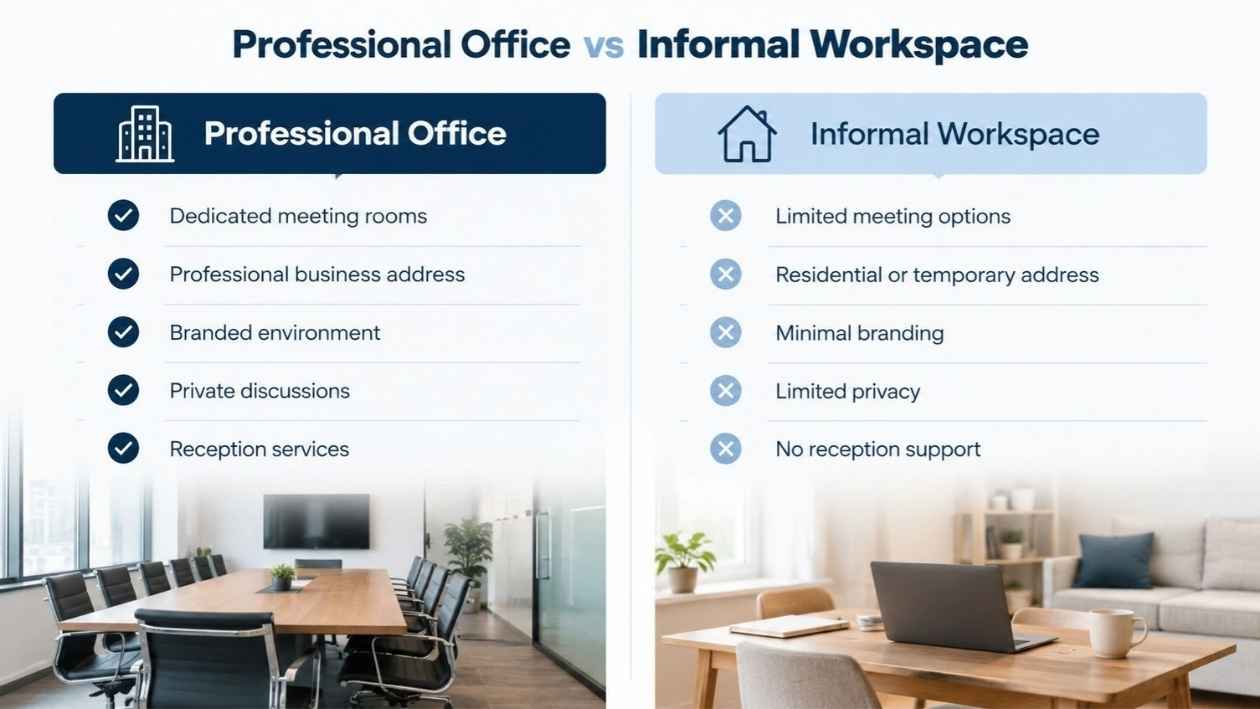
| Professional Office | Informal Workspace |
| Dedicated meeting rooms | Limited meeting options |
| Professional business address | Residential or temporary address |
| Branded environment | Minimal branding |
| Private discussions | Limited privacy |
| Reception services | No reception support |
For industries such as consulting, legal services, finance, technology, and real estate, a professional office can help strengthen business credibility. It also offers financial and operational advantages compared to purchasing commercial property outright. Many organizations choose to lease office space because it provides flexibility, lower upfront costs, and easier scalability as business needs change. Understanding the advantages of leasing office space can help companies make smarter long-term real estate decisions.
Why Collaboration Thrives in Professional Office Spaces
Collaboration is one of the key advantages of having a dedicated workplace. Many business ideas, solutions, and innovations emerge through face-to-face interactions. Employees often solve problems faster when they can communicate directly with team members.
As workplace strategies continue to evolve, many organizations are balancing in-office collaboration with remote flexibility. This shift has led businesses to rethink how much space they need and how offices are being used. Companies adapting to these changes are seeing firsthand how hybrid work is changing office space demand, as offices increasingly become hubs for teamwork, meetings, and collaboration rather than simply places for individual work.
Benefits of workplace collaboration include:
- Faster communication
- Better knowledge sharing
- Increased innovation
- Stronger teamwork
- Improved project execution
Professional office spaces create opportunities for these interactions to happen naturally throughout the workday, helping teams stay connected and productive.
The Role of Office Space in Company Culture
Company culture is built through daily experiences, interactions, and shared goals.
A professional office provides employees with a central place to connect with coworkers, managers, and leadership teams. It helps create a sense of belonging and reinforces organizational values.
A strong workplace culture often contributes to:
- Higher employee engagement
- Better communication
- Improved morale
- Increased retention
- Greater job satisfaction
When employees feel connected to their workplace, they are often more motivated to contribute to business success.
Why Office Location Matters
Choosing the right office location can have a major impact on both employees and clients. An accessible location makes it easier for employees to commute and for clients to visit. It can also improve recruitment efforts and strengthen a company’s presence within its industry.
Many businesses today are also exploring mixed-use office spaces that combine workplaces, restaurants, retail stores, fitness facilities, and other amenities within a single development. These environments can improve employee convenience while creating a more engaging workplace experience.
Benefits of a Strategic Business Location
For Employees
- Easier commuting
- Better work-life balance
- Access to local amenities
- Improved convenience
For Businesses
- Better visibility
- Stronger client accessibility
- Easier recruitment
- Enhanced brand presence
Office Location Checklist:
| Consideration | Importance |
| Accessibility | High |
| Parking Availability | High |
| Public Transportation | High |
| Nearby Amenities | Medium |
| Business Environment | High |
| Expansion Potential | High |
Selecting the right location helps businesses create a more convenient and professional experience for employees and clients alike.
Attracting and Retaining Top Talent
Many employees consider workplace quality when evaluating job opportunities.
Salary remains important, but many professionals also value:
- Comfortable workspaces
- Modern technology
- Flexible work environments
- Employee amenities
- Positive company culture
A professional office can help businesses compete for talented employees by providing a workplace that supports both productivity and well-being.
Workplace Features Employees Appreciate
| Feature | Benefit |
| Natural Light | Improved comfort |
| Ergonomic Furniture | Reduced fatigue |
| Collaboration Areas | Better teamwork |
| Quiet Workspaces | Improved focus |
| Meeting Rooms | Enhanced communication |
Investing in workplace quality can support recruitment efforts and improve employee retention.
How Office Design Influences Business Performance
Office design affects how employees work, communicate, and experience their workplace.
Research reviews suggest that physical work environments can influence employee outcomes, organizational processes, and workplace experiences.
An effective office design should balance:
- Privacy
- Collaboration
- Flexibility
- Comfort
- Technology integration
Important Elements of Modern Office Design
| Design Element | Benefit |
| Private Work Areas | Better concentration |
| Collaboration Spaces | Improved teamwork |
| Comfortable Furniture | Employee wellness |
| Technology Integration | Operational efficiency |
| Flexible Layouts | Adaptability |
Businesses that thoughtfully design their office environments often create better experiences for both employees and visitors.
Professional Office Space Supports Business Growth
As organizations grow, their workspace requirements evolve. A growing business may require additional workstations, larger meeting rooms, upgraded technology infrastructure, or more client-facing spaces.
One important consideration during expansion is whether a company should commit to a long-term lease or maintain greater flexibility through shorter rental agreements. Understanding the differences between short-term and long-term office renting can help businesses choose a solution that aligns with their growth plans, budget, and operational needs.
Business Growth Benefits
- Accommodates larger teams
- Supports operational expansion
- Improves client experiences
- Enhances company image
- Provides scalability
Growth Impact Overview
| Business Need | Office Space Benefit |
| Hiring New Employees | Additional workspace |
| More Client Meetings | Professional facilities |
| Team Expansion | Improved collaboration |
| Operational Growth | Scalable infrastructure |
| Brand Development | Enhanced credibility |
A workspace that supports growth helps businesses adapt more easily to changing demands while positioning them for future success.
Common Challenges Businesses Face Without Professional Office Space
Businesses that operate without dedicated office environments may encounter challenges that affect productivity, communication, and professionalism.
Common issues include:
- Limited meeting facilities
- Reduced privacy
- Communication barriers
- Productivity challenges
- Lower client confidence
- Growth limitations
Potential Business Impact
| Challenge | Possible Outcome |
| Lack of Meeting Space | Missed opportunities |
| Poor Collaboration | Slower project completion |
| Limited Infrastructure | Reduced efficiency |
| Unprofessional Environment | Lower credibility |
| Restricted Capacity | Growth limitations |
Addressing these challenges often begins with securing a professional workspace that aligns with business goals.
Why Businesses Choose The Mt Washington Group
Finding the right office space is about more than square footage. Businesses need an environment that supports productivity, collaboration, client interactions, and future growth.
The Mt Washington Group offers office spaces in Baltimore designed to support different business needs, from private offices to flexible workspace options.
What Sets The Mt Washington Group Apart?
- Private office options
- Dedicated workspace options
- Multiple office sizes
- Baltimore locations
- Flexible space configurations
Benefits for Growing Businesses
| Advantage | Value |
| Flexible Solutions | Adapt to changing needs |
| Professional Environment | Build credibility |
| Meeting Facilities | Support client interactions |
| Modern Infrastructure | Improve efficiency |
| Scalable Spaces | Grow with confidence |
Whether you’re launching a startup, expanding your team, or establishing a more professional business presence, The Mt Washington Group offers office solutions designed to support long-term success.
Frequently Asked Questions
Why is professional office space important for businesses?
Professional office space helps improve productivity, collaboration, client confidence, and overall business credibility.
Does office space affect employee productivity?
Research suggests that workplace design, layout, and access to suitable work environments can influence employee productivity and performance.
How does office space impact client relationships?
A professional office creates a strong first impression and helps build trust by demonstrating professionalism and stability.
What should businesses look for when choosing office space?
Businesses should consider location, accessibility, scalability, meeting facilities, technology infrastructure, and employee amenities.
Is professional office space still important in a hybrid work environment?
Offices continue to play an important role in collaboration, team building, client meetings, and company culture.
How can professional office space support business growth?
Professional office space provides the infrastructure, flexibility, and professional environment needed to accommodate team expansion, client growth, and operational development.
Conclusion
Professional office space is far more than a physical location. It influences productivity, collaboration, employee satisfaction, client confidence, and overall business performance.
As businesses continue to evolve, the workplace remains an important part of supporting teams, client relationships, and long-term business needs. By investing in a professional office environment, organizations can create a foundation that helps them operate more effectively today while preparing for future opportunities tomorrow.