
Renting a home in Maryland comes with certain rights and responsibilities. Whether you are applying for your first apartment, using a Section 8 voucher, or already renting a home, knowing the rental laws can help you avoid problems.
Several Maryland housing laws took effect in 2026, including changes that began on October 1. These laws address housing voucher applications, rent payment reporting, criminal background screening, and certain apartment cooling requirements. These laws change how certain landlords review rental applications, check criminal records, and offer rent payment reporting. Other housing requirements, including air-conditioning rules for certain apartments, also became applicable during 2026.
These changes are especially important for renters who receive housing assistance, have a low credit score, or want to better understand their rights.
This guide explains the new laws in simple terms, including what landlords cannot do, what renters can expect, and what legal standards landlords must follow when renting a unit in Maryland.
Maryland Housing Laws 2026: What’s New?
Here’s a simple breakdown of the major changes.
| New law | What it means for renters |
| Section 8 and housing voucher protections | Certain landlords cannot reject qualifying voucher applicants because of low credit scores or income alone |
| Rent payment reporting | Eligible renters can choose to have on-time rent payments reported to credit reporting agencies |
| Criminal background checks | Covered landlords must follow new rules when checking an applicant’s criminal history |
| Air conditioning | Certain apartment buildings must meet new cooling requirements |
| Fair housing protections | Some housing policies may be unlawful if they unfairly affect protected groups |
| Tenants’ Bill of Rights | Landlords must provide the current official document explaining important tenant rights |
Remember: These laws have different requirements and exceptions. For example, a rule for a large apartment building may not apply to someone renting out a single-family home.
1. New Rules for Section 8 and Housing Voucher Applicants
Law: HB 315 / SB 335 | Effective October 1, 2026
One of the biggest changes is for renters who use Section 8 or other qualifying housing assistance programs.
Under HB 315/SB 335, covered landlords face restrictions on denying applicants who use qualifying income-based housing subsidies solely because of their income, credit score, lack of credit history, or certain earlier adverse credit information. The law includes exceptions and does not prevent other lawful screening.
This is important because many renters rely on vouchers to help pay their monthly rent.
What Does This Mean for Section 8 Renters?
If you have a Section 8 Housing Choice Voucher, the housing program may cover part of your rent while you pay the remaining amount.
The new law means a landlord generally cannot reject your application simply because your personal income is too low to cover the full rent without the voucher.
The landlord also cannot use your low credit score or lack of a credit score as a prohibited reason to deny your application.
However, landlords can still check whether you can pay your share of the rent and utilities.
Example: Renting an Apartment With a Section 8 Voucher
Suppose you apply for an apartment in Baltimore with the following details:
| Rental details | Example |
| Monthly apartment rent | $1,500 |
| Housing voucher assistance | $1,100 |
| Your share of rent | $400 |
| Your credit score | 540 |
These are example amounts, not an actual voucher calculation. The housing agency determines approved assistance and the tenant’s payment share.
If you use a qualifying housing subsidy and the landlord is covered by the law, a credit score of 540 generally cannot be the sole reason for denying your application, subject to the law’s exceptions.
The landlord can still check whether you can pay your $400 share of rent and any utilities you are responsible for.
Can Landlords Still Reject Section 8 Applicants?
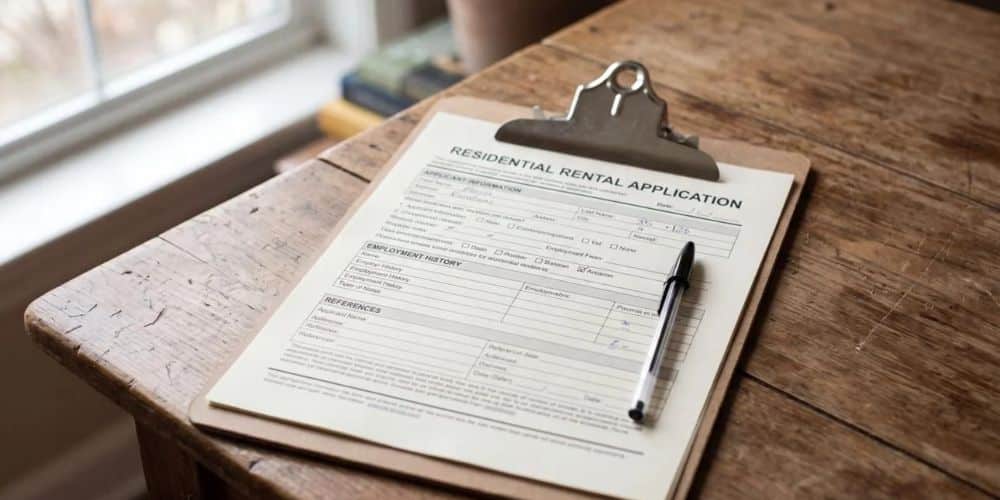
Section 8 Applicants
Yes. The new law does not mean every Section 8 application must be approved.
Landlords may still consider other lawful reasons, such as:
- Previous lease violations
- Unpaid utility bills
- Property damage caused during a previous tenancy
- References from previous landlords
- Other reasonable screening requirements that do not discriminate
What renters should remember: Having a Section 8 voucher does not guarantee an apartment, but qualifying applicants now have stronger protections against certain financial screening decisions.
2. Renters Can Choose to Report On-Time Rent Payments
Paying rent on time is an important responsibility. But even if you have paid rent regularly for years, those payments may not appear on your credit report.
Maryland’s new law requires covered landlords to offer tenants the option of reporting their positive rental payment history to credit reporting agencies.
This means your complete, on-time rent payments may help you build a credit history.
How Does Rent Payment Reporting Work?
If you choose to participate, your landlord arranges for your qualifying rent payments to be reported through a reporting service.
The service shares the payment information with participating credit reporting agencies.
For example, if you pay your rent in full and on time every month, those payments may appear as positive payment history on your credit report.
However, this does not guarantee that your credit score will increase.
When Will Renters Get This Option?
| Your lease situation | When the option must be offered |
| You sign a new lease on or after October 1, 2026 | When signing the lease |
| You signed your lease before October 1, 2026 | By January 1, 2027 |
| You continue renting | At least once every year |
Is Rent Reporting Free?
Not always. A landlord may charge a fee if you choose to participate.The fee cannot be more than $10 per month or the actual cost of the service, whichever is lower.
For example, if the service costs your landlord $6 per month, the landlord cannot charge you $10.
What renters should remember: Rent reporting is optional. You can decide whether to participate after checking the cost and understanding how the service works.
3. New Rules for Criminal Background Checks
Law: SB 937 | Effective October 1, 2026
A criminal record can make it harder for someone to find a rental home.
Maryland’s new Fair Chance Housing Act changes how certain landlords can ask about and use an applicant’s criminal history.
The law generally applies to housing providers that own or manage five or more residential units in Maryland and conduct criminal background checks.
It does not apply to certain owner-occupied rental units.
Can Landlords Still Ask About Criminal History?
Yes, but there are new limits.
Landlords may ask about certain criminal convictions during the application process. For other criminal-history information, they generally must first make a conditional offer of housing.
A conditional offer means the landlord is willing to rent to you, provided you meet the remaining lawful requirements.
The new law also limits which criminal records can be considered.
What Happens if Your Application Is Rejected?
If a covered landlord withdraws a conditional offer because of your criminal history, the landlord must explain the reason.
You can then ask the landlord to review the decision again.
You may provide documents or information that the landlord must consider during the reassessment.
Simple Example
Suppose you apply for an apartment and the landlord makes a conditional offer.
During a permitted background check, the landlord finds a previous conviction and decides to withdraw the offer.
Under the new law, the landlord must follow the required process, explain the decision, and give you an opportunity to request reassessment.
This does not mean the landlord must approve every applicant with a criminal record.
What Else Has Changed?
The law also prohibits covered housing providers from advertising that they will not consider applicants with criminal histories. Landlords cannot require prospective tenants to take drug or alcohol tests.
What renters should remember: A criminal record does not automatically mean you will be denied housing. Covered landlords must follow specific rules when considering criminal history.
4. New Air-Conditioning Rules for Certain Maryland Apartments
Law: SB 12 | Effective June 1, 2026, with additional provisions applying October 1, 2026
Maryland also passed a law to improve cooling conditions in certain rental apartments.
Under SB 12, certain rental units in apartment buildings with 10 or more units must have air conditioning that can maintain a temperature of 80°F or lower during the June 1–September 30 cooling season. The requirements depend on when the unit was constructed, whether air conditioning was previously provided, and whether qualifying renovations occurred.
If the landlord controls the air-conditioning system, the landlord must keep the apartment at or below the required temperature during that period.
Does Every Rental Home Need Air Conditioning?
No. This law does not require every Maryland rental home to have air conditioning.
It applies to certain apartments that meet specific conditions.
| Type of apartment | Does the new requirement apply? |
| Newly constructed qualifying unit covered by the law beginning June 1, 2026 | Yes |
| Qualifying unit that had air conditioning after January 1, 2025 | Yes |
| Qualifying unit whose lease required landlord-provided AC after January 1, 2025 | Yes |
| Qualifying unit with certain major electrical or heating renovations after October 1, 2026 | Yes |
| Single-family rental home | Not covered by this particular law |
| Building listed on the National Register of Historic Places | Excluded |
What Should You Do if Your Apartment Is Too Hot?
If your apartment is covered by the law and the cooling system is not working properly, contact your landlord or property manager.
Explain the problem and request repairs. It is helpful to keep written records of your maintenance requests and any responses.
If the problem is not resolved, contact your local housing code enforcement office for guidance.
What renters should remember: Check whether your apartment is covered before assuming your landlord must install air conditioning. The law has specific building and unit requirements.
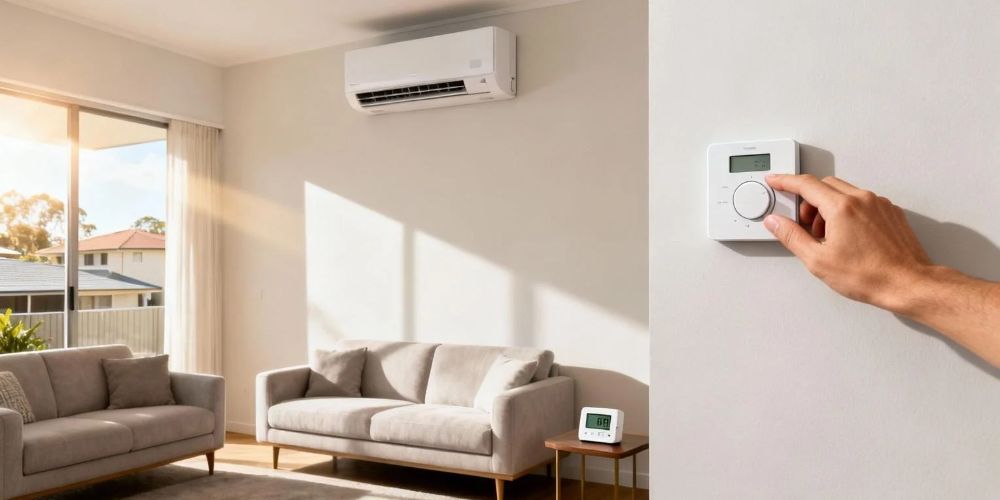
Install Air Conditioning
5. Maryland’s Updated Tenants’ Bill of Rights for 2027
Maryland published an updated Tenants’ Bill of Rights on October 1, 2026
This document explains important rights that renters have under Maryland and federal law.
It covers topics such as fair housing, rental agreements, and other protections.
Why Is This Document Important?
Many renters sign a lease without fully understanding their legal rights.
The Tenants’ Bill of Rights gives renters a place to find important information in simpler language.
Maryland landlords must attach the latest official version to every residential lease. They are not allowed to change the wording of the document.
What Should Renters Do?
When signing a lease, check that the landlord has included the current Tenants’ Bill of Rights.
What renters should remember: The Tenants’ Bill of Rights is not a new law by itself. It is an updated document explaining existing rights and recent legal changes.
6. Other Maryland Housing Law Changes in 2026
Along with the major changes above, Maryland passed other laws that may affect renters and property owners.
Fair Housing Rules: HB 573
Housing discrimination does not always involve someone openly refusing to rent to a person because of a protected characteristic.
Sometimes a housing policy may look fair but have an unfair effect on a protected group.
HB 573 addresses certain housing practices that have discriminatory effects, even when discrimination was not intended.
For example, a rental policy that applies to everyone could still raise fair housing concerns if it unfairly affects people protected by law.
Whether the policy is unlawful depends on the circumstances and the legal exceptions.
Lead Safety Rules: SB 872
Maryland already has laws designed to reduce lead exposure in certain older rental homes.
SB 872 changes the legal definition of a rental dwelling unit under the state’s lead-risk reduction law.
This matters because the definition helps determine which properties must follow those requirements.
It does not mean every rental home suddenly needs a new lead inspection.
Legal Help for Mobile Home Park Residents: SB 729
Maryland’s Access to Counsel in Evictions Program helps eligible residents obtain legal assistance in certain eviction cases.
SB 729 expands the program to include qualifying people living in mobile home parks.
This means eligible residents may be able to receive legal help when facing an eviction.
These changes are part of Maryland’s broader efforts to address housing rights and responsibilities.
7. What Do These New Laws Mean for Baltimore Renters?
If you rent or plan to rent an apartment in Baltimore, the new laws may affect your rental application and your rights as a tenant.
For example, Section 8 voucher holders now have additional protections against certain income and credit-based screening decisions.
Some tenants can also choose to report their on-time rent payments, while renters applying to covered properties have new protections related to criminal background checks.
What Should You Check Before Renting?
| If you are… | What you should know |
| Using a Section 8 voucher | Check your rights under the new income and credit screening rules |
| Applying with a low credit score | Understand whether the new subsidy protections apply to you |
| Interested in building credit | Ask about positive rent payment reporting |
| Concerned about a criminal record | Understand the Fair Chance Housing Act |
| Renting an apartment without working AC | Check whether your unit is covered by the cooling law |
| Signing a new lease | Ask for the current Tenants’ Bill of Rights |
Baltimore renters should also be aware that local rental laws may apply in addition to Maryland’s statewide rules.
8. Rental Housing and Voucher Programs in Baltimore
Baltimore renters can choose from different types of rental homes, including apartments and townhomes managed by private landlords and property management companies.
The Mount Washington Group has managed residential rental properties in Baltimore since 2005, including properties that accept Section 8 and other qualifying housing vouchers.
Renters using housing assistance should check each property’s rental requirements, voucher acceptance, and application process. Understanding Maryland’s updated housing laws can also help renters know what to expect when applying for a home.
9. Where Can Maryland Renters Get Help?
If you believe a landlord has violated your rights, the first step is to understand which law may apply.
Different organizations handle different housing concerns.
| Housing problem | Where to get help |
| Possible housing discrimination | Maryland Commission on Civil Rights |
| Questions about tenant rights | Maryland DHCD Office of Tenant and Landlord Affairs |
| Need legal assistance | Maryland Legal Aid |
| Apartment maintenance or housing code concerns | Local housing code enforcement office |
| Section 8 voucher questions | Your local public housing agency |
For example, if you believe your rental application was denied because of a prohibited credit screening practice involving your housing voucher, you can contact the Maryland Commission on Civil Rights for information about filing a complaint.
If you need legal advice, contact a qualified legal assistance provider. Maryland DHCD’s Office of Tenant and Landlord Affairs provides information and referrals but does not directly provide legal representation.
Frequently Asked Questions
1. What new housing laws started in Maryland on October 1, 2026?
Maryland introduced new rules for housing voucher applicants, rent payment reporting, and criminal background checks. The state also updated its Tenants’ Bill of Rights.
2. Can a landlord deny me because I have a Section 8 voucher?
Maryland law protects eligible renters using housing subsidies from certain income- and credit-based screening decisions. Landlords may still apply other lawful screening criteria.
3. Can a landlord reject my application because I have bad credit?
Generally, not solely because of your credit score, lack of credit history, or certain past negative credit history if you use a qualifying income-based housing subsidy. Other lawful screening criteria may still apply.
4. Can a landlord check whether I can afford my share of Section 8 rent?
Yes. Landlords may verify that you can pay the portion of rent not covered by your housing subsidy.
5. Do I have to report my rent payments to credit bureaus?
No. Maryland tenants can choose whether to participate in their landlord’s positive rent reporting program.
6. Can reporting rent payments improve my credit score?
Yes, it may help build a positive credit history, but a higher credit score is not guaranteed.
7. Can I rent an apartment in Maryland if I have a criminal record?
Yes, potentially. Covered landlords must follow Maryland’s Fair Chance Housing Act when checking and considering an applicant’s criminal history.
8. Does my landlord have to provide air conditioning?
Not always. Maryland’s new air-conditioning requirements apply to certain rental apartments, depending on building size, property conditions, and the applicable effective date.
9. What is the 80-degree rule for Maryland apartments?
Certain covered apartments must have air conditioning capable of maintaining a temperature of 80°F or lower from June 1 through September 30, subject to the law’s requirements.
10. Do these laws apply to Baltimore rental properties?
Yes. Statewide laws apply to qualifying Baltimore rental properties, and additional Baltimore City housing rules may also apply.
11. Do landlords have to provide the new Tenants’ Bill of Rights?
Yes. Maryland landlords must attach the current official Tenants’ Bill of Rights to residential leases.
12. What should I do if I believe a landlord violated Maryland’s housing laws?
Keep copies of your lease, application, and relevant messages. Contact the Maryland Commission on Civil Rights for possible discrimination issues or seek help from Maryland DHCD or a legal aid organization.
What Maryland Renters Should Remember
Maryland’s 2026 housing law changes give many renters clearer protections when applying for housing and understanding their rights.
For Section 8 voucher holders, one of the biggest changes is that qualifying applicants generally cannot be rejected because of certain income or credit-related issues. Other changes give tenants the option to report on-time rent payments and set new rules for criminal background checks and cooling systems in certain apartments.
Before applying for a rental home or signing a lease, take time to understand which rules apply to your situation. Knowing your rights can help you ask the right questions and make more informed rental decisions.